The Ampsu blog
On logging food, metabolism, and what the numbers actually tell you.
The Stats page has had a refresh
A tidier Stats page with your weight trend up top and one time range for everything, plus a quicker way to log your weight.
Creatine for women: does it work, and will it make you bloated?
Creatine improves strength in women too, at the same 3 to 5 g a day. What studies show on muscle, bloating, menopause and the brain, and how to take it.
How to lose belly fat (and why crunches won't do it)
You can't spot-reduce belly fat with ab exercises. What actually shrinks it, why visceral fat matters most and how to measure your waist instead of the scale.
Creatine side effects and weight gain: water, hair, kidneys
Creatine's main side effect is 0.5 to 1 kg of water on the scale in the first week. What the research says about weight gain, hair loss, kidneys and cramps.
Alcohol calories: beer, wine and spirits compared
A half-litre of beer has about 215 kcal, a glass of wine 130 and a shot 90. Calories per drink, why alcohol slows weight loss and how to drink without undoing your week.
What does creatine do? Benefits, dose and when to take it
Creatine helps muscles in short, hard efforts and adds a little muscle with training. What it does, how much to take, loading, timing and which form to buy.
High-protein snacks under 200 kcal from the supermarket
Skyr, quark and tuna give 15 to 25 g of protein for about 100 kcal. Supermarket snacks under 200 kcal, ranked by protein per calorie, plus the ones that disappoint.
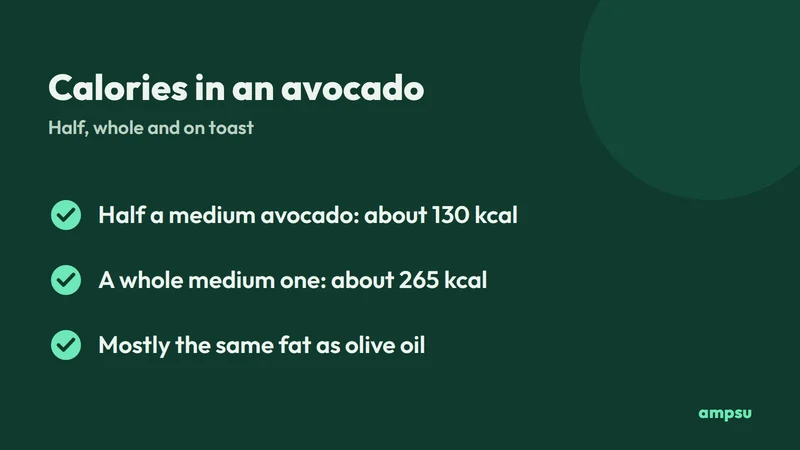
How many calories in an avocado? Half, whole and on toast
Half a medium avocado has about 130 kcal and a whole one about 265. Calories by size, why avocado is so dense, what the big trial found and how to log it.
Log food from Claude or ChatGPT: connect Ampsu in a minute
Tell Claude or ChatGPT what you ate and it lands in your Ampsu diary. How to connect each one, what it can and can't do, how accurate it is and what the AI gets to see.
Free calorie counter apps: what you get without paying, and who's watching
Nearly every calorie counter is free, with in-app purchases. What the subscriptions cost on the UK App Store, which apps declare tracking, and how to spot a fair free version.
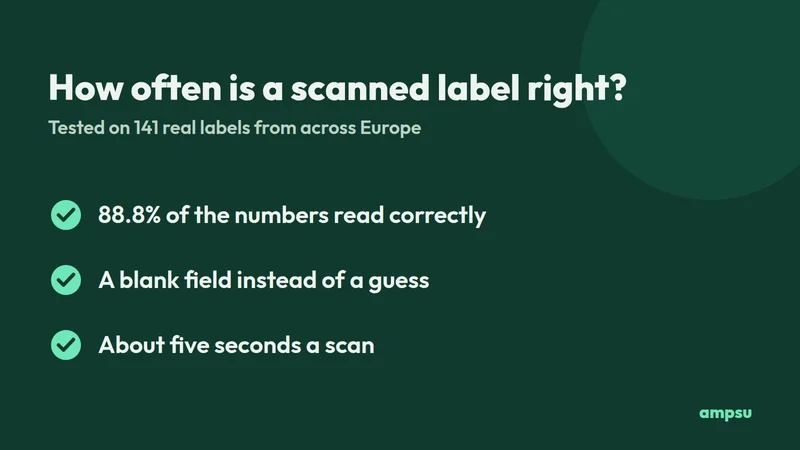
How accurate is scanning a nutrition label? I tested 141 real labels
Photographing the nutrition table beats typing it, until a number comes out wrong. How often that happens on 141 real labels from across Europe, and what to check before you save.
Why your calorie app can't find own-brand food (or the deli sticker)
You scan a supermarket own-brand yoghurt or a deli-counter sticker and get nothing. What those barcodes are, why big food databases miss them, and how to tell them apart in the shop.
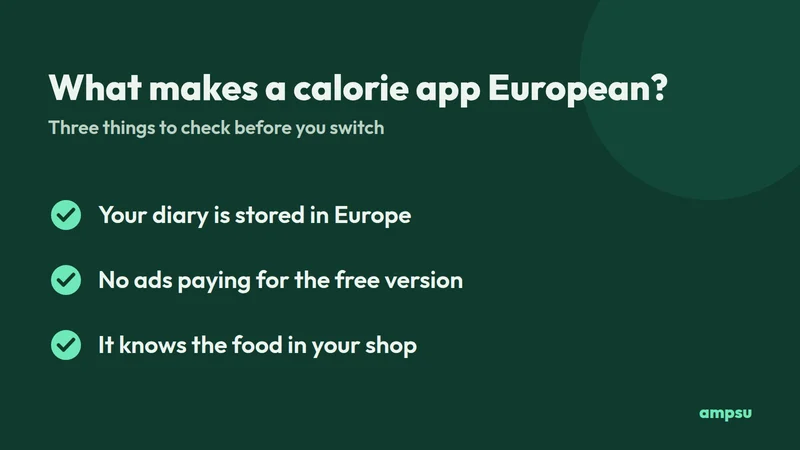
A European alternative to MyFitnessPal: what to actually check
Where your food diary is stored, who pays for the free version, and whether the app knows what's on your shelf. How the usual calorie apps compare.
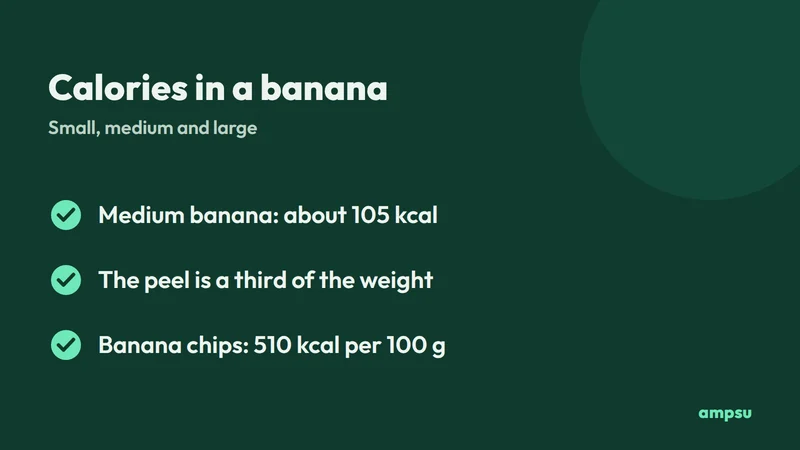
How many calories in a banana? Small, medium and large
A medium banana has about 105 kcal, a small one 90 and a large one 120 to 135. Calories by size, peel weight, ripeness, banana chips and how to log it.
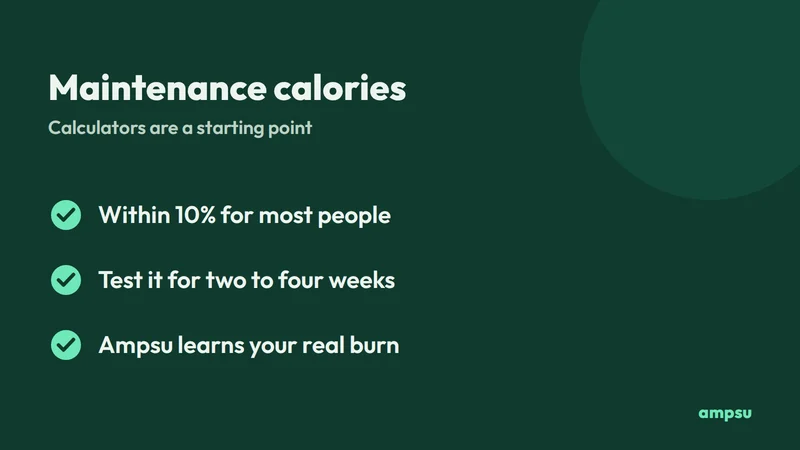
Maintenance calories: how to find your real number
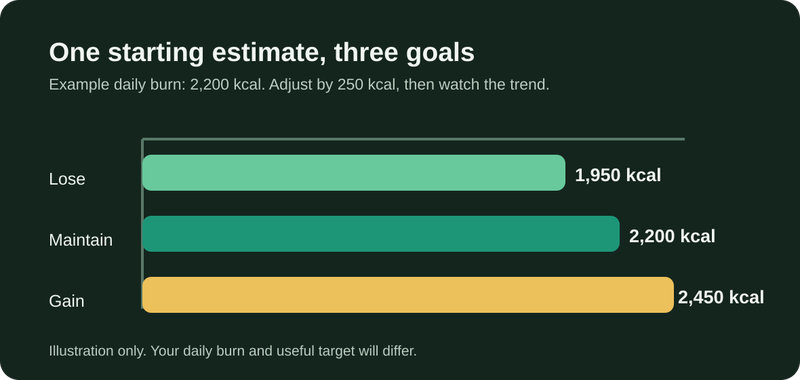
Maintenance calories keep your weight stable. Calculators get within about 10% for most people; here's how to find your real number with a few weeks of logging.
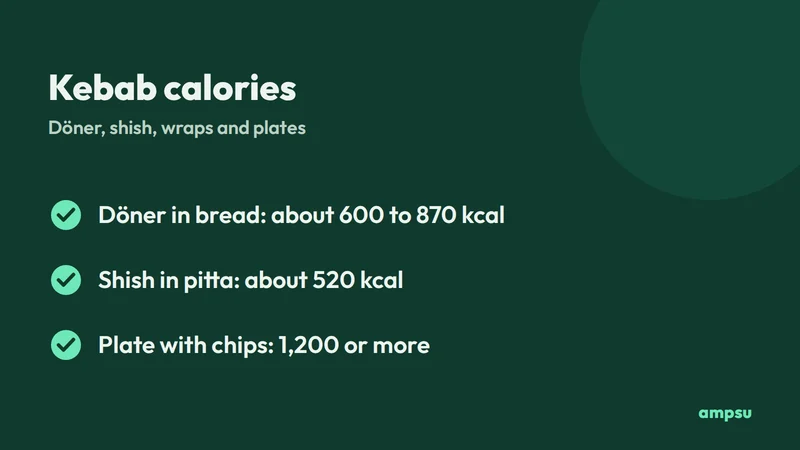
Kebab calories: döner, shish, wraps and kebab plates
A normal döner kebab in bread has about 600 to 870 kcal, a shish closer to 520 and a plate with chips over 1,200. What changes the number and how to log it.
Reverse dieting: does it fix your metabolism?
Reverse dieting promises to repair your metabolism after a diet, but no trial backs that. What really happens after weight loss and how to find your new maintenance.
Plant-based protein sources: which ones give you the most?
Tofu, tempeh, seitan and soya mince give 17 to 23 g of protein per 100 g; beans and lentils 8 or 9. The best plant sources, complete protein and a 100 g day.
Body recomposition: lose fat and build muscle at once
You can lose fat and gain muscle at the same time, especially as a beginner. What the studies show, how much protein you need and why the scale barely moves.
How much protein per day? Grams for your weight and goal
Most adults need about 0.8 g of protein per kg a day, but losing weight, training or being over 65 changes that. A table by weight, and 100 g as food.
Cheat meals and refeeds: do they ruin your diet?
A cheat meal barely dents a week's deficit; a cheat day can erase most of it. The maths, what refeed and diet-break studies found, and how to fit a big meal in.
Wegovy pill: how it works, how to take it and what to eat
The Wegovy pill is daily semaglutide, approved in the EU in 2026. Trial results, the 30-minute morning rule and how to eat to keep your muscle.
Keto for weight loss: does it beat other diets?
Keto works about as well as other diets that cut calories, and doesn't burn more body fat at the same calories. What the trials found, the downsides and how to start.
How many calories in an egg? Boiled, fried and by size
A medium egg has about 70 kcal boiled and 100 fried. Calories and protein for small to XL eggs, yolk vs white, and how to log eggs accurately.
OMAD (one meal a day): does it work for weight loss?
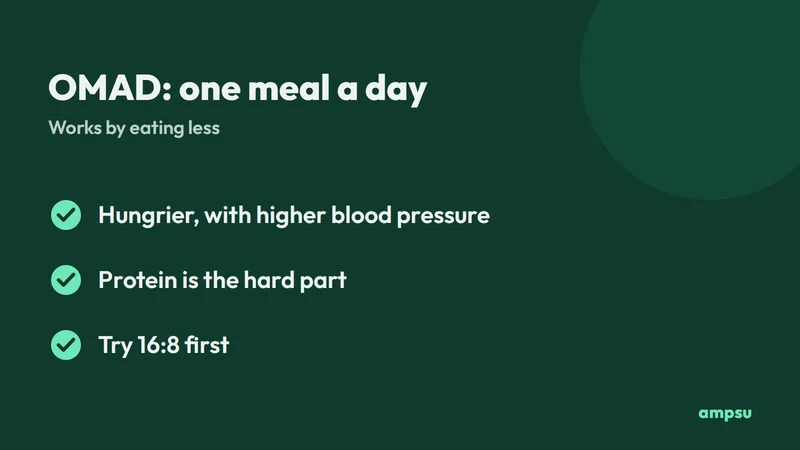
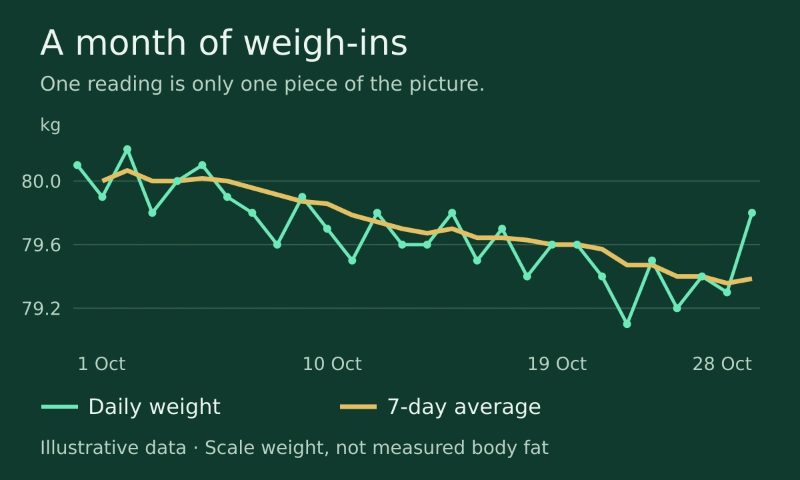
One meal a day can cause weight loss, mostly because one meal rarely covers a day's calories. What studies found, what a month feels like and who should skip it.
Why am I not losing weight in a calorie deficit?
Logging your meals but the scale won’t budge? Before eating less, check the weight trend, the whole week of food and the estimate behind your target.
How to calculate calories in homemade food
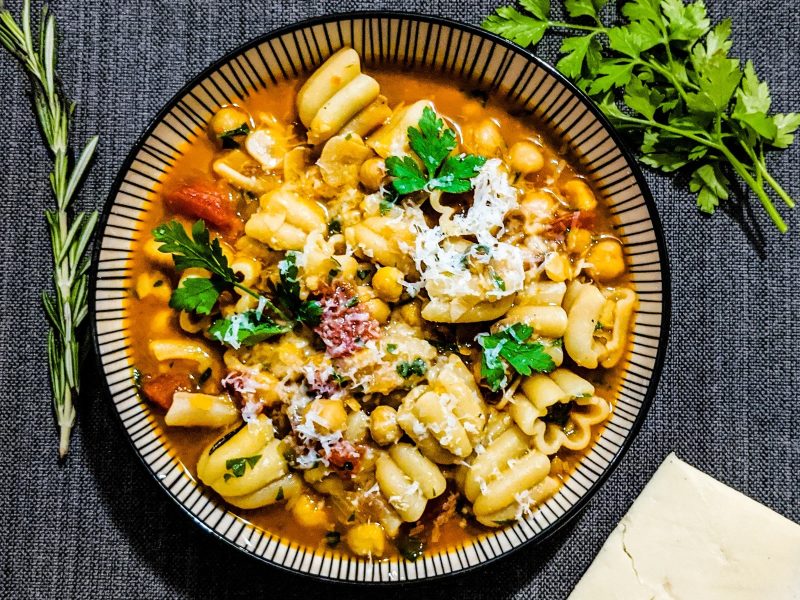
Add up the ingredients, weigh the finished dish and calculate your portion. A worked pasta example covers oil, cooked weights, servings and leftovers.
How much fibre per day? What 30 g looks like on a normal day
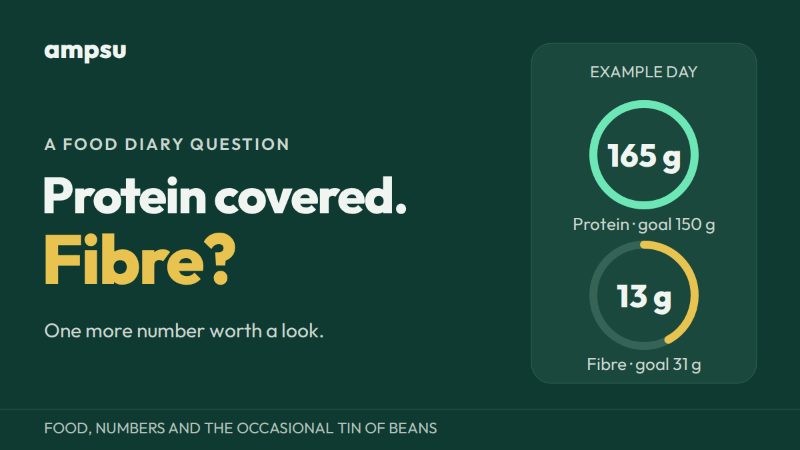
Adults should aim for 25 to 30 g of fibre a day, and most eat about half. What fibre does, what 30 g looks like on an ordinary day, and how to track it.
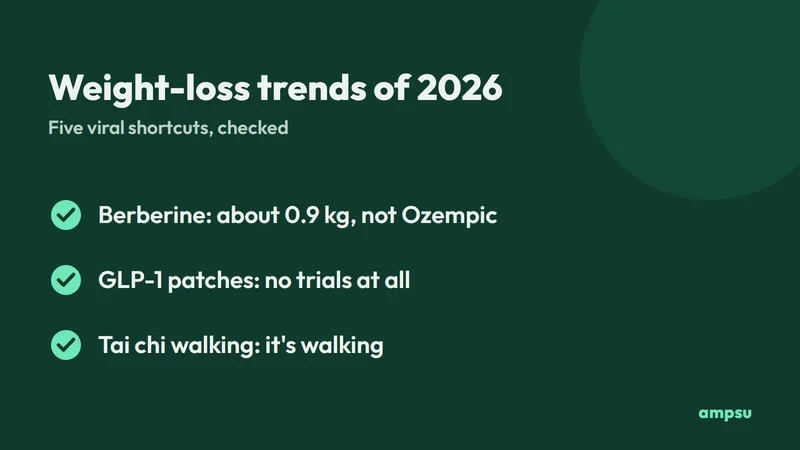
Weight-loss trends of 2026 checked: berberine, gelatin and more
Berberine, the gelatin trick, cortisol pills, GLP-1 patches and tai chi walking: what the studies say about each, and which ones are worth keeping.
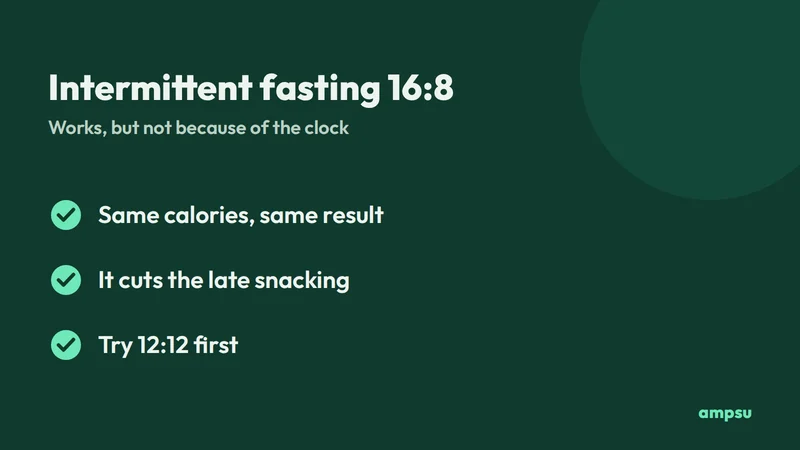
Intermittent fasting 16:8: does it work for weight loss?
16:8 fasting works about as well as eating less any other way. What the trials found, why the window helps some people, the downsides and how to try it.
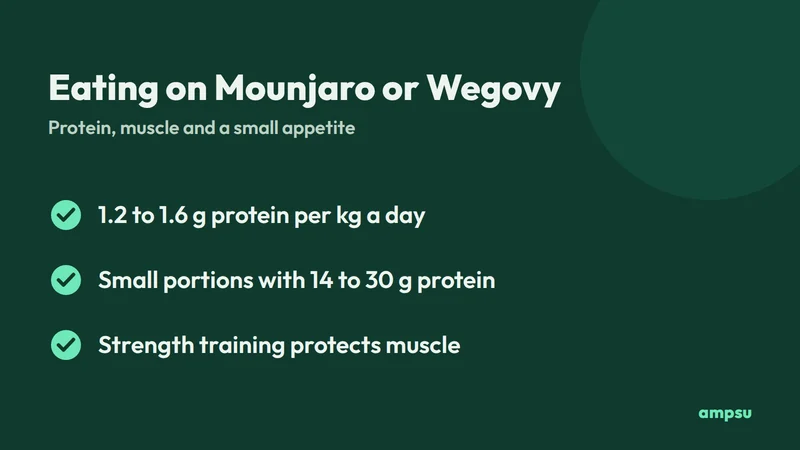
What to eat on Mounjaro or Wegovy: protein, muscle, low appetite
Eating far less on a GLP-1? Make the little you eat count: how much protein, keeping muscle, small high-protein portions and why weight can stall.
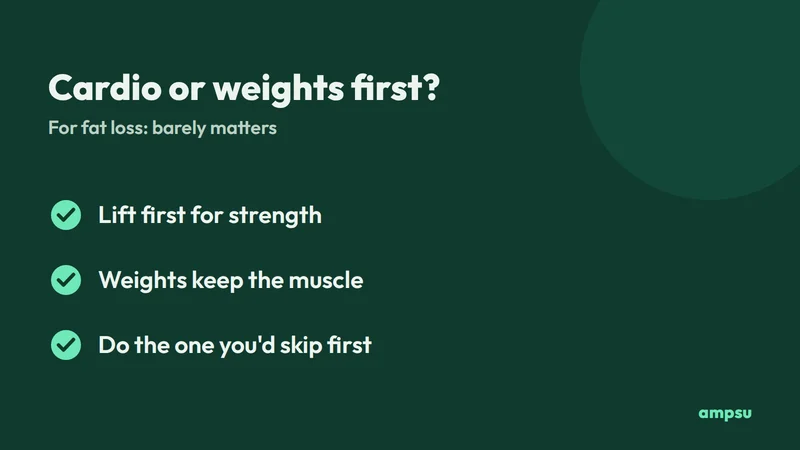
Cardio or weights first for fat loss? What the research says
For fat loss, the order of cardio and weights barely matters. Lifting first helps leg strength a little. What the studies found and a simple session to follow.
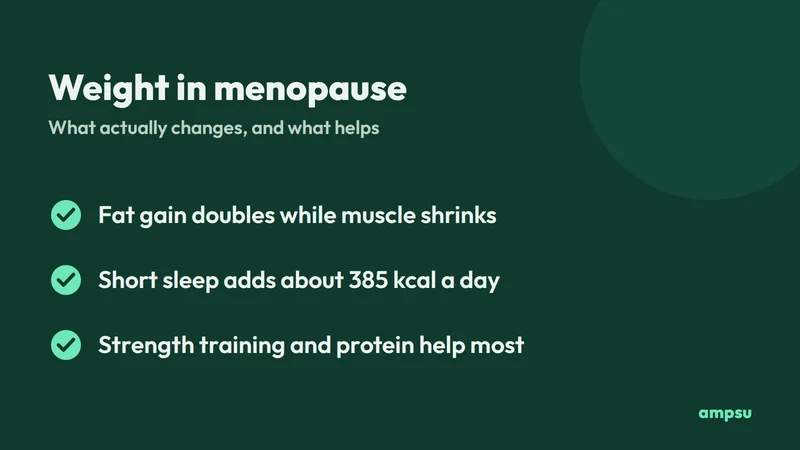
Menopause weight gain: what actually changes, and what helps
Weight doesn't speed up at menopause, but fat gain doubles while muscle shrinks. What the studies show about metabolism, sleep and HRT, and what helps.
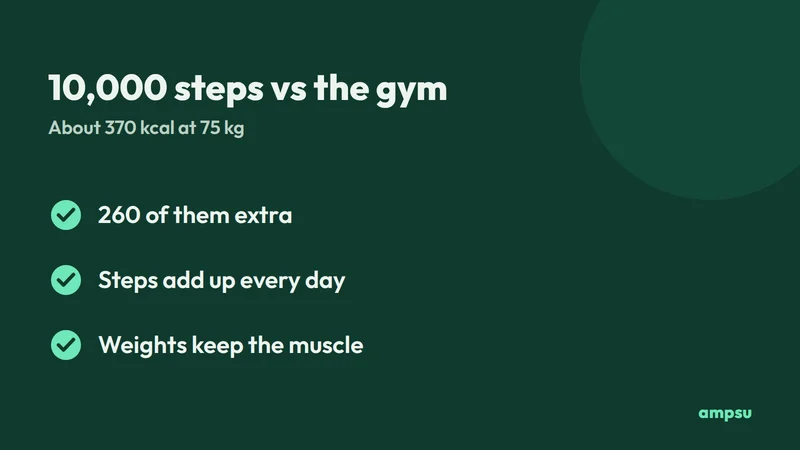
How many calories do 10,000 steps burn? Steps vs the gym
10,000 steps burn about 370 kcal at 75 kg, 260 of them extra. How that compares with a gym session, why everyday movement matters and how many steps to aim for.
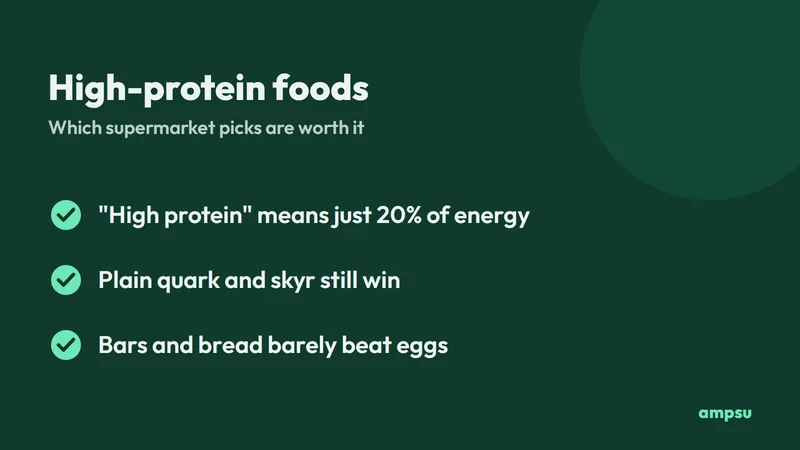
High-protein foods: which supermarket picks are worth it?
What "high protein" on a label really means, and how puddings, bars, quark, skyr and everyday foods compare on protein per calorie, from thousands of labels.
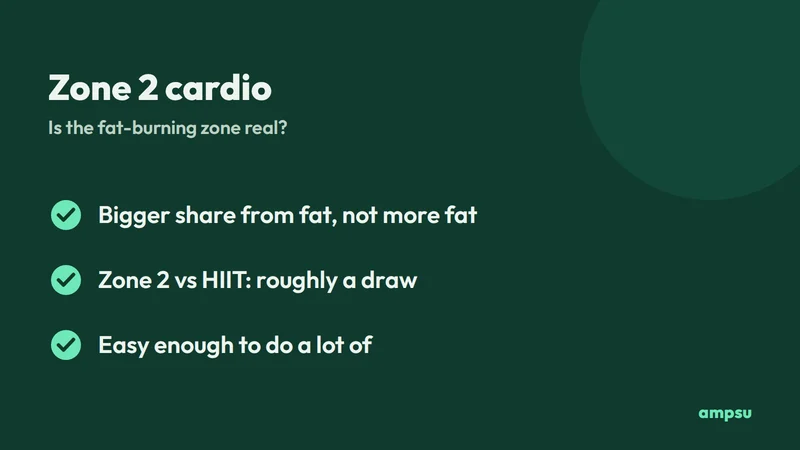
Zone 2 cardio: is the fat-burning zone real?
Zone 2 burns a bigger share of fat, but not more fat overall than harder cardio. What zone 2 is, how to find your heart rate, zone 2 vs HIIT and how much to do.
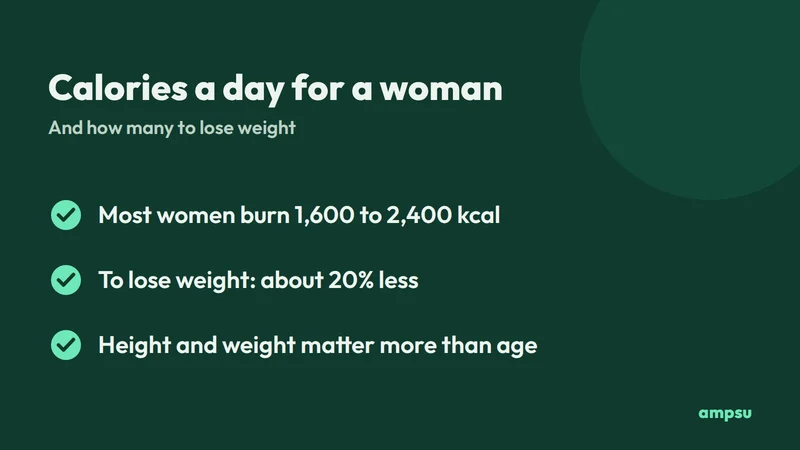
How many calories should a woman eat a day to lose weight?
Most women burn about 1,600 to 2,400 kcal a day. Tables by age and activity, how much size changes it, and how many calories to eat to lose weight.
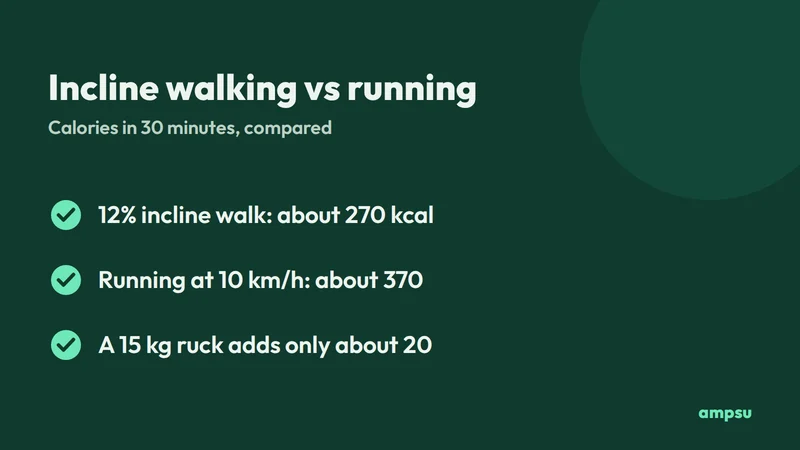
Incline walking vs running, rucking and cycling: calories compared
Half an hour of 12% incline walking burns about 270 kcal at 75 kg, close to cycling and a jog. Calories compared, why hills work and the lowest-effort option.
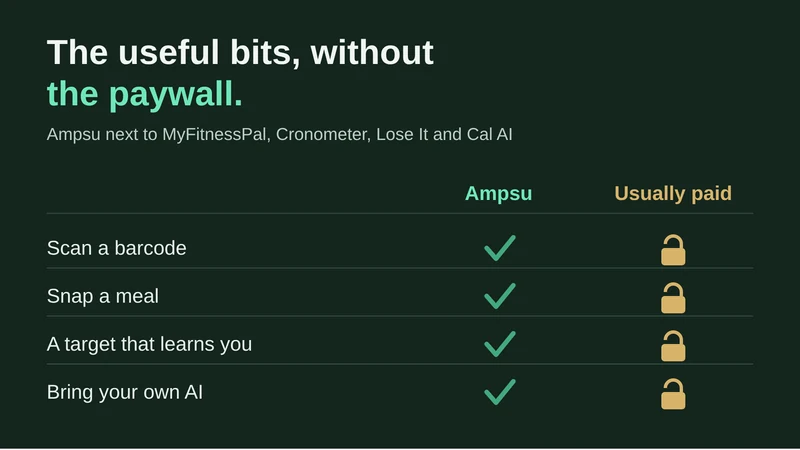
Best calorie tracker app 2026: MyFitnessPal vs Yazio and more
MyFitnessPal, Yazio, Lose It!, Cronometer, MacroFactor, Cal AI and Ampsu compared for 2026: what's free, what's paywalled and which fits how you eat.
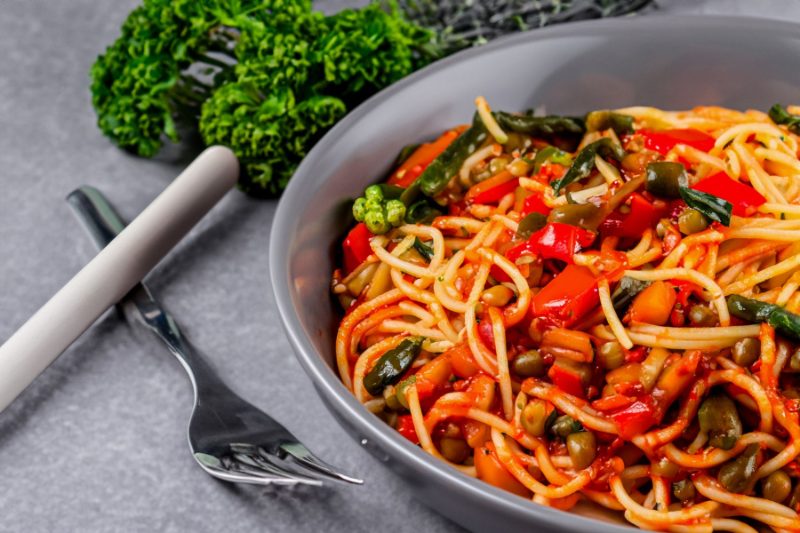
How to make dinner filling while eating fewer calories
Make the dinner you already like feel more substantial by replacing some of the calorie-dense part with vegetables. A pasta example shows the maths.
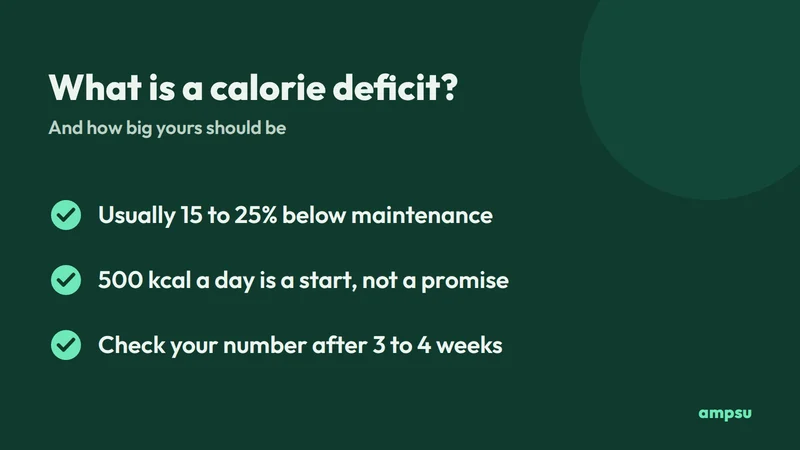
What is a calorie deficit, and how big should yours be?
A calorie deficit explained: how big it should be (usually 15 to 25% below maintenance), why 500 kcal a day isn't quite 0.5 kg a week, and how to find yours.
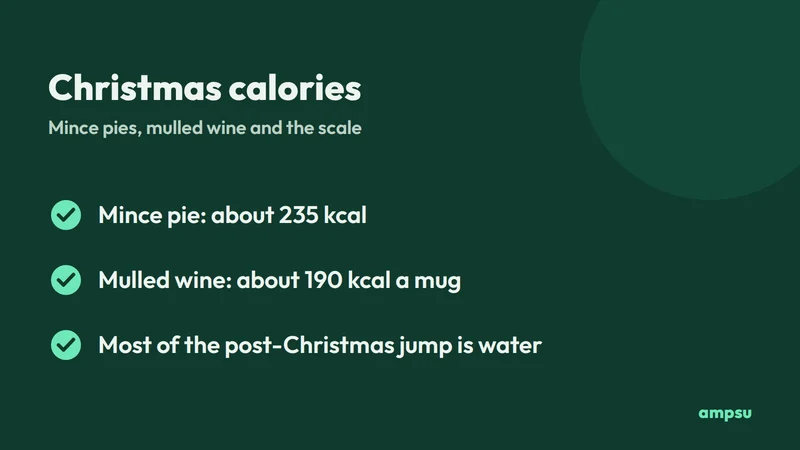
Christmas calories: mince pies, mulled wine and the scale
How many calories are in a mince pie, Christmas pudding or mulled wine, what a whole festive day adds up to, and why the scale jumps 1.5 kg after Christmas.
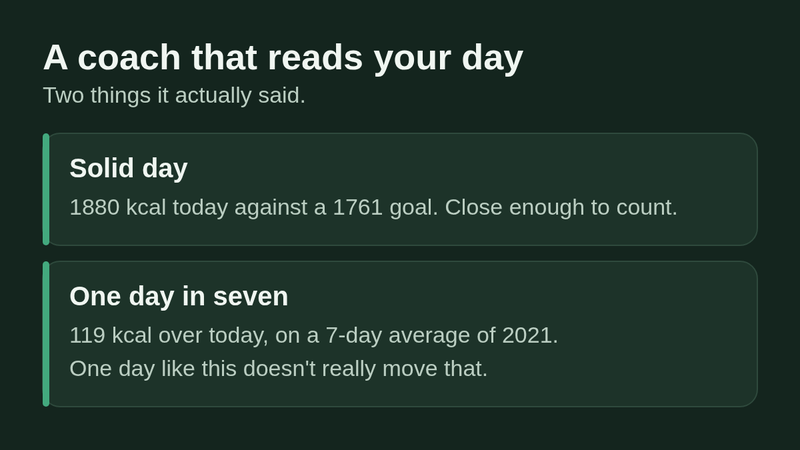
How the coach in Ampsu reads your day
What it looks at, how it picks what to say, and how to bring your own AI along.
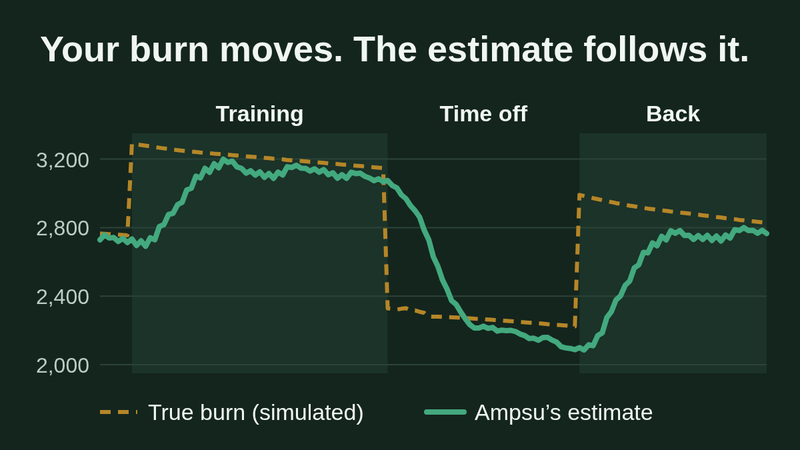
Metabolism mode: how Ampsu learns what you actually burn
What metabolism mode does with your food log and weigh-ins, why it beats a calculator after a few weeks, and how to get a number you can trust out of it.
How to track calories without weighing every cucumber
How to pick a target, log a real day, and deal with the days that go over it.
Not just another calorie tracker
A calorie tracker that logs food in seconds, learns your real calorie needs from your data, and gets out of the way. Made in Estonia.